How do you choose mountain gloves?
Gloves are there to cover the hands, the most peripheral part of the whole body together with the feet.
The hands, a little less than the feet, suffer the risk of frostbite in very severe temperatures.
But the hands, especially in mountaineering, are essential for our safety. They are needed to check knots, to handle ropes and ice axes. The hands are needed even just to light a little gas stove to make a hot cup of tea.
For this reason, even more than our feet, we must manage to protect our hands as much as possible.
Which type of glove should you choose? Well, the answer is always the same. Gloves are chosen according to the type of activity you want to do and, clearly, also according to the season in which we do certain sports.
So let us start with the types of glove available on the market.
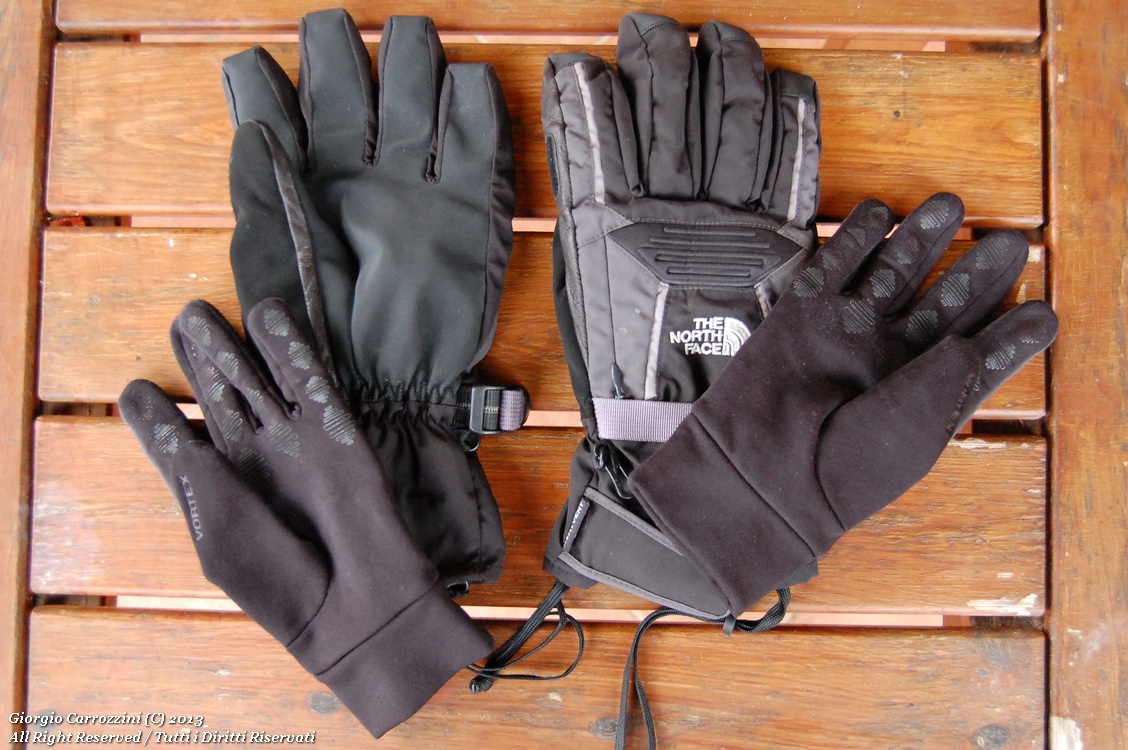 Winter mountaineering gloves with inner glove
Suited above all to mountaineering, this kind of glove is very similar to ski gloves, with a Velcro strap that closes at the wrist and an elastic drawcord higher up so that you can close the glove around your jacket. When wearing this glove you must remember not to tighten the Velcro too much: this would in fact slow down the blood circulation in the fingers. You have to learn to tighten them in the most correct way.
This type of glove is often sold with a lighter inner glove. The point of this type of glove with its inner glove is that you can take the glove off without completely uncovering your hand. Useful when you have to carry out precise manoeuvres with laces, karabiners, or tying cords. This type of glove is absolutely useless for hiking, especially in the Apennines. They turn out, in fact, to be too warm. In hiking the body is always moving. There is no risk of stopping for long periods to belay a rope companion. In hiking the body stays warm and the heart pumps enough blood to the limbs (hands and feet), which always stay warm enough.
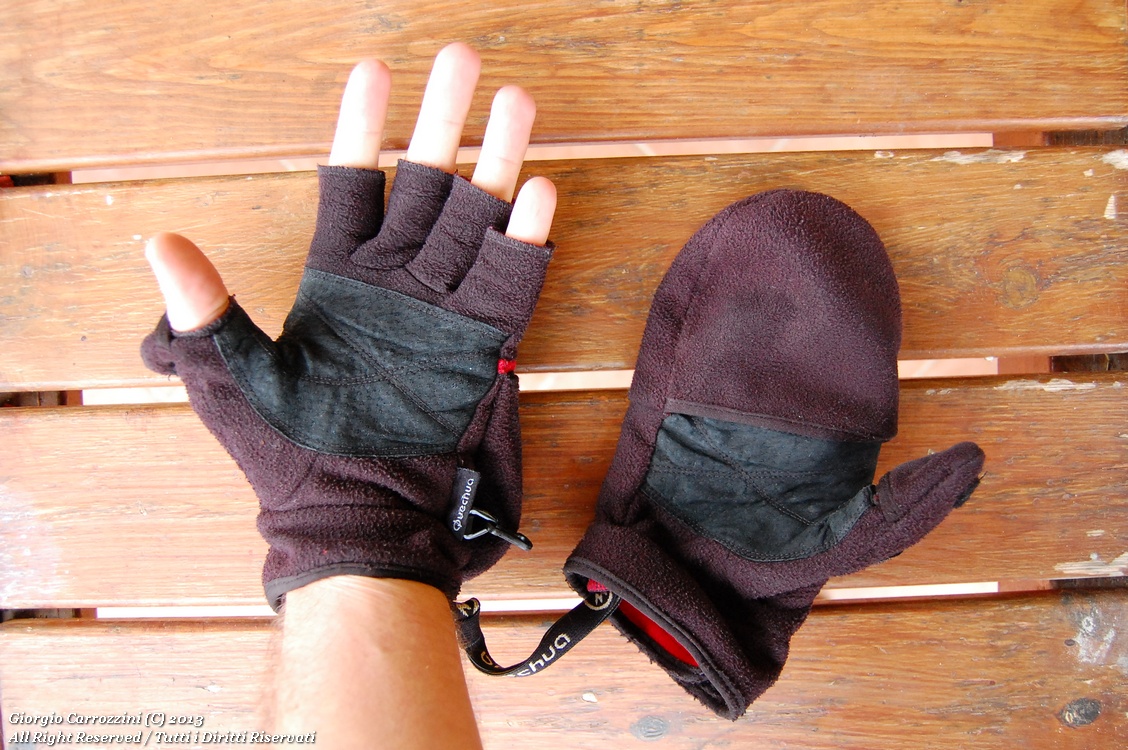 Mittens with retractable cover.
These are special gloves, very well suited to hiking. The structure is that of a cycling glove in which the fingertips are left uncovered. Sewn onto the upper part we find a retractable mitten that can be folded back when we need to uncover our fingers. This is the case when we want to take photos and need the sensitivity of our fingertips to take the picture. They are not too warm and they let you regulate the warmth on your fingers without having to pull them off.
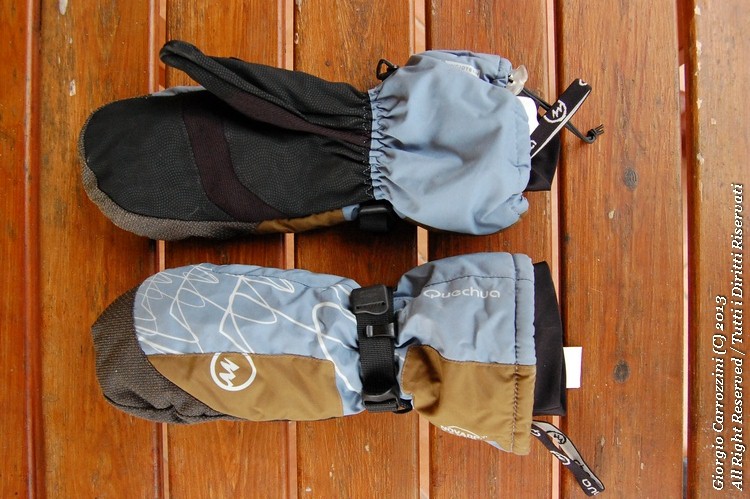 Full mittens for high-altitude mountaineering and long stays in the high mountains.
Full mittens are rarely useful, I would say in some cases awkward to use in mountaineering. Useful if you want to stay on in the mountains for a bivouac. Mittens cover the hand completely and part of the wrist; the fingers, in contact with one another, tend to warm up more easily. Inside the glove a warmer, sheltered air pocket forms which keeps the hands safe and reduces heat loss.
Mittens can go over the jacket, preventing the icy wind from getting inside the sleeves.
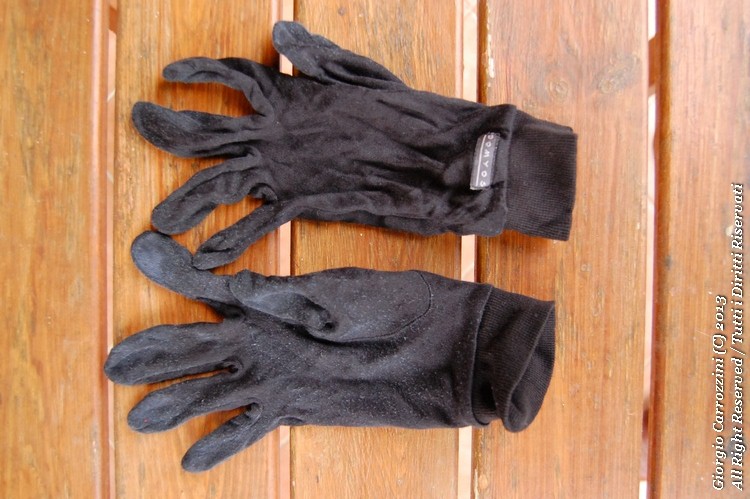 Silk gloves to wear under mountain gloves.
Silk or cycling gloves are very light little gloves that we can keep in the rucksack in case of need.
Being very thin they are not very warm, but they let you hold the ice axe, which in winter conditions, being metal, becomes extremely cold. They do not take up much space, and having a pair of little silk gloves (or winter cycling gloves) can, if you lose your main gloves, really save your fingers and in some cases your life.
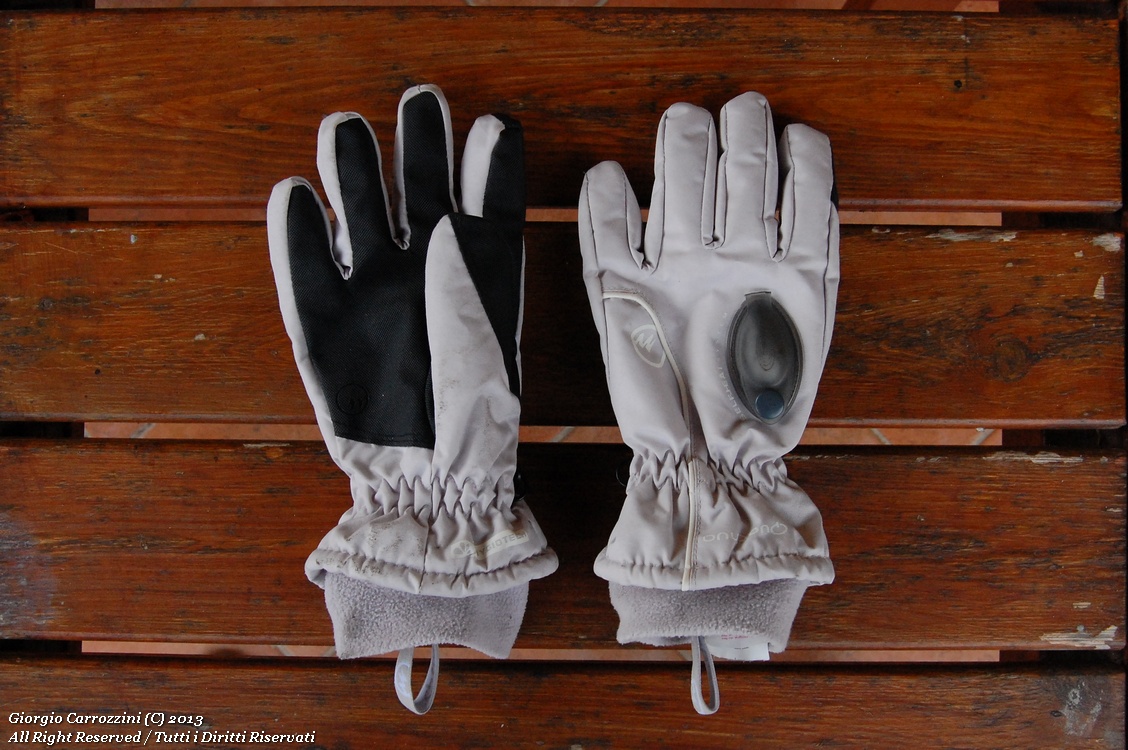 Ski gloves
They are very similar to winter mountaineering gloves. They do not cover the wrist completely and have a few fewer finishing touches; their function, however, is essentially the same (protecting from the cold).
If you have no other type of glove they are also suitable for hikes in winter conditions. They have a small opening on top for blowing the warm air of your breath into them. In my opinion this is wrong, because in the long run it makes the inside of the glove damp and therefore colder too.
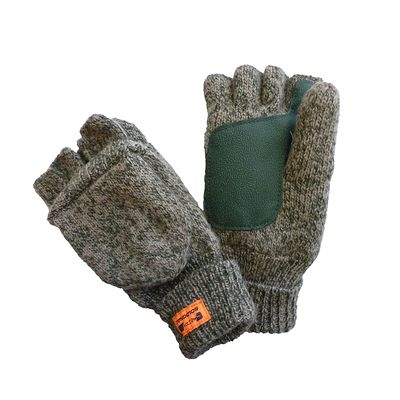 Wool gloves and mittens
Wool gloves are perhaps among the most used by old-guard mountaineering. They are certainly warmer, but they get damp easily and, not being water-repellent, they get wet almost at once.
What is more, they dry very slowly.
As a rule they are better suited to hiking than to mountaineering.
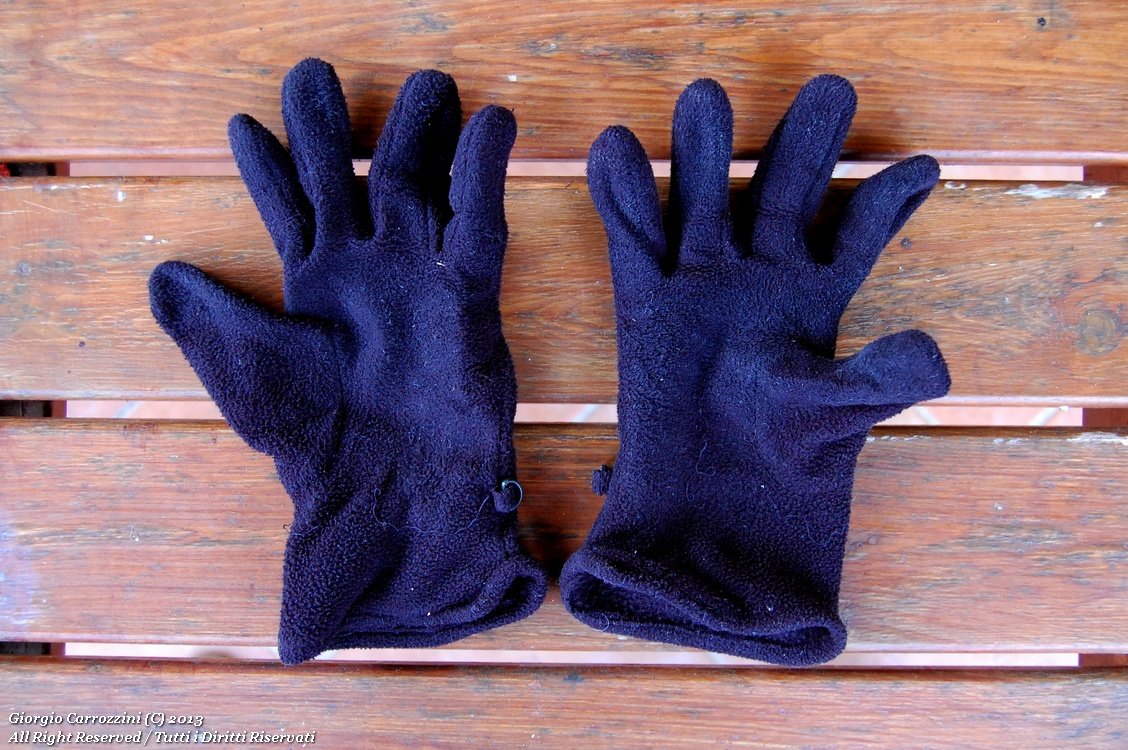 Fleece gloves
They are light, compressible, do not take up much space and are excellent as emergency gloves. They dry very quickly and this is a truly considerable advantage. They are no good worn as liner gloves.
Keeping them at the bottom of the rucksack can always come in handy.
Gloves for via ferratas
Gloves for via ferratas are made of stiff, tough materials but are not designed to protect from the cold. When doing via ferratas you should carry an extra pair of gloves specifically designed to protect you from the cold.
Your hands must never go numb. They are for us a real survival tool. With our hands we can find our balance, handle tools and equipment. Keeping your hands always warm is a matter of our safety.
Frequently asked questions
How do you choose mountain gloves?
Gloves are chosen according to the activity and the season. Mountaineering gloves with an inner glove are too warm for hiking in the Apennines, where the body keeps moving: better to use mittens with a retractable cover, which let you uncover your fingers without pulling them off.
Why carry a spare pair of gloves in your rucksack?
Little silk or fleece gloves take up little space and, if you lose your main gloves, they can save your fingers. Fleece gloves dry very quickly and are excellent as emergency gloves.