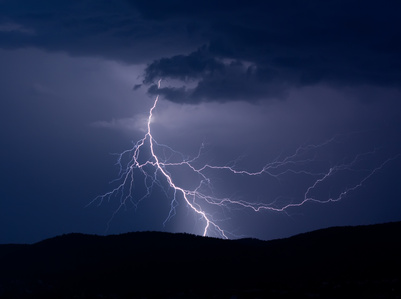
Lightning is a phenomenon that occurs between the clouds (negatively charged) and the Earth (positively charged).
When the difference in electrical potential is so high that it breaks through the insulator (the air) lying between the two (clouds and Earth), lightning is generated; it is imperceptibly preceded by leader discharges from the cloud and return discharges from the ground, which then join up, and the discharge takes place.
Since the speed of sound in air is 340 m/sec and that of light is 300,000 km/sec, you can calculate the distance in metres between you and the lightning by multiplying by 340 the number of seconds between flash and thunder.
If the storm breaks while we are in the mountains (which happens most often in the summer months), you must:
- move away from summits, ridges and isolated trees;
- not stop in open spaces;
- crouch down with your feet tightly together, without touching your companions (ideally keep about ten metres apart);
- if you have to move, it's better to do so by hopping, touching the ground with one foot at a time, because once the electric discharge hits the ground it tends to spread out in concentric circles;
- cover your ears with your hands to avoid damage to your eardrums.
Let's also remember that the steel cables of vie ferrate and of equipped paths, as well as wet ropes, are potentially dangerous, since they are preferential channels for lightning discharges. Let's also get rid of sharp objects with steel points (umbrellas, geologist's hammers). Finally, let's remember that people struck by lightning are not electrically charged, so there is no risk in touching them and helping them. Start mouth-to-mouth resuscitation straight away: absence of breathing is common in people struck by lightning.
Call Mountain Rescue (CNSAS) immediately: if help arrives quickly, the chances of survival increase.