|
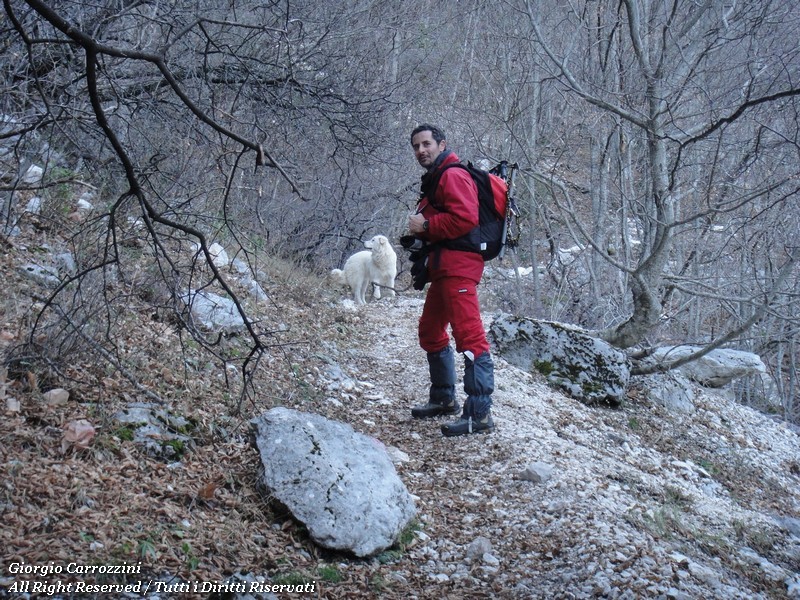
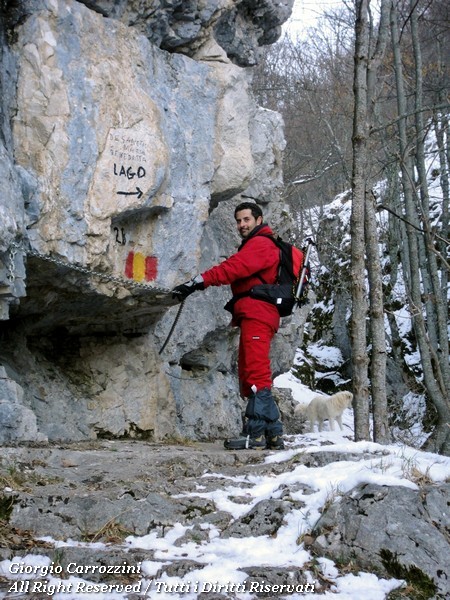
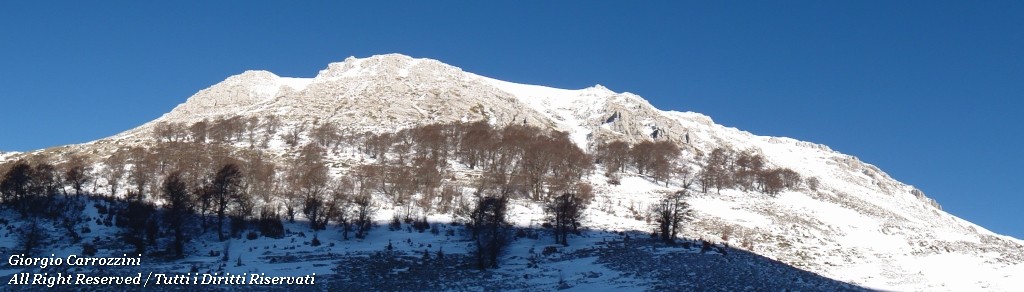
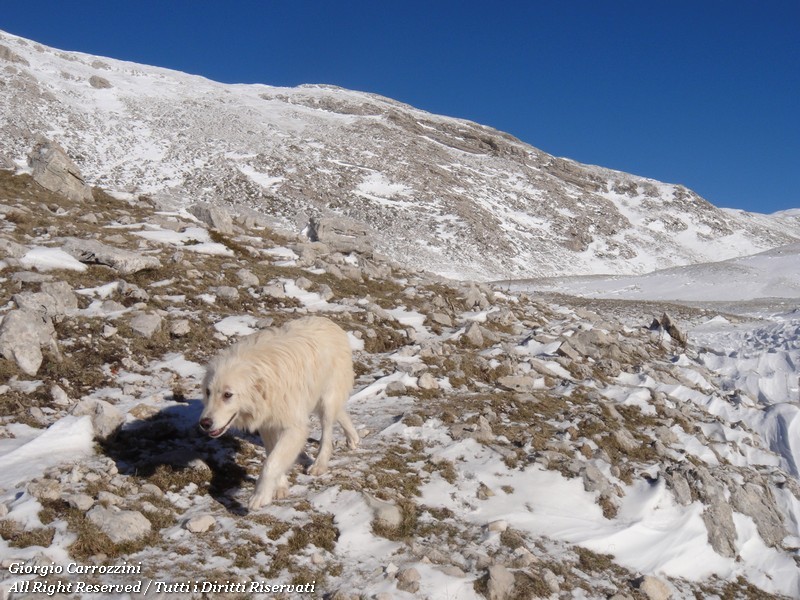
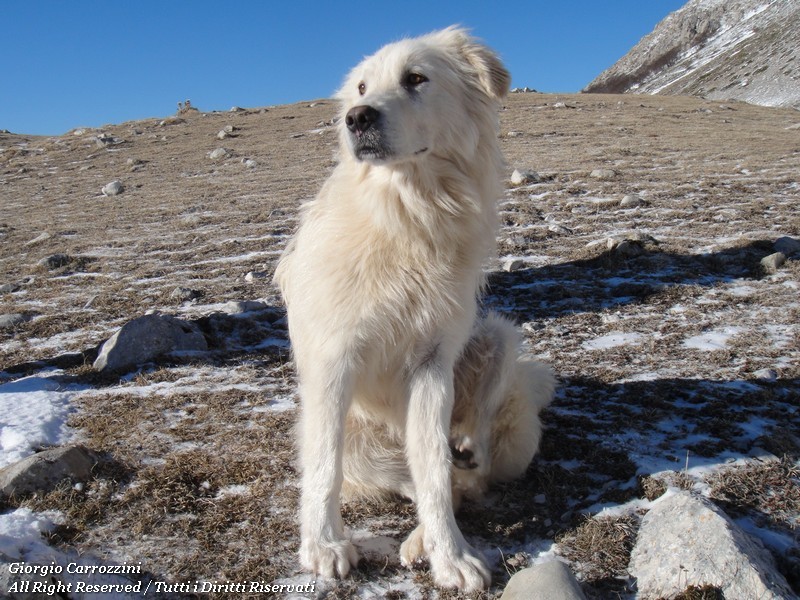
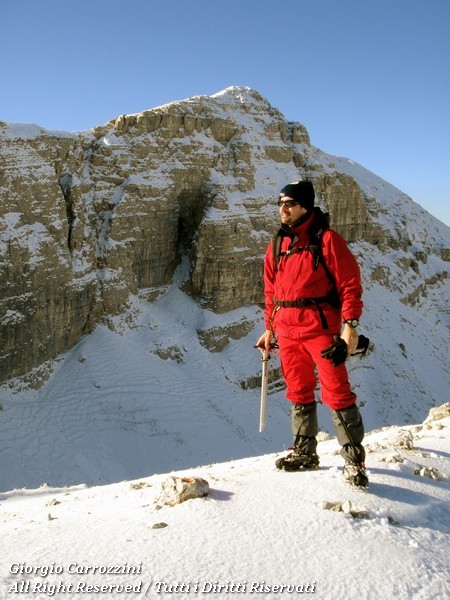
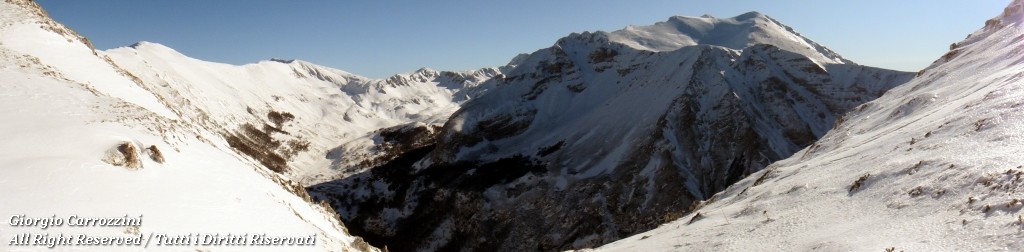
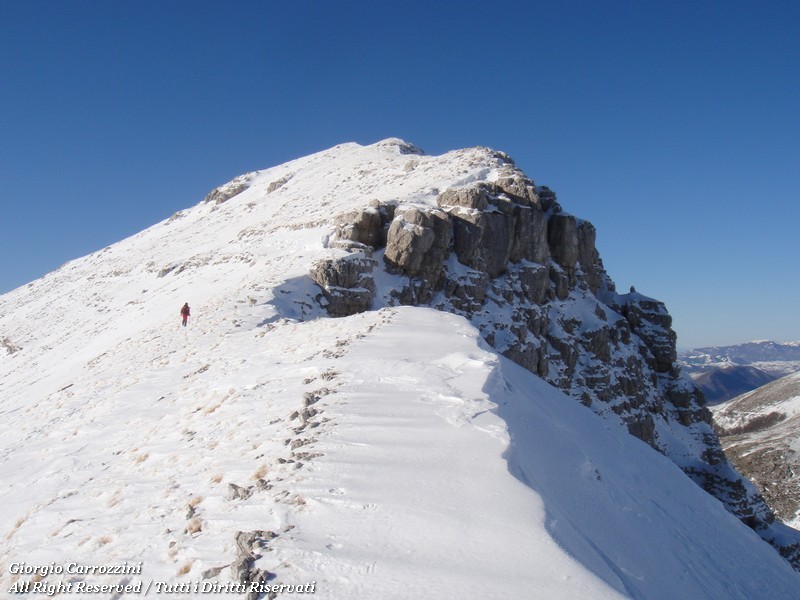
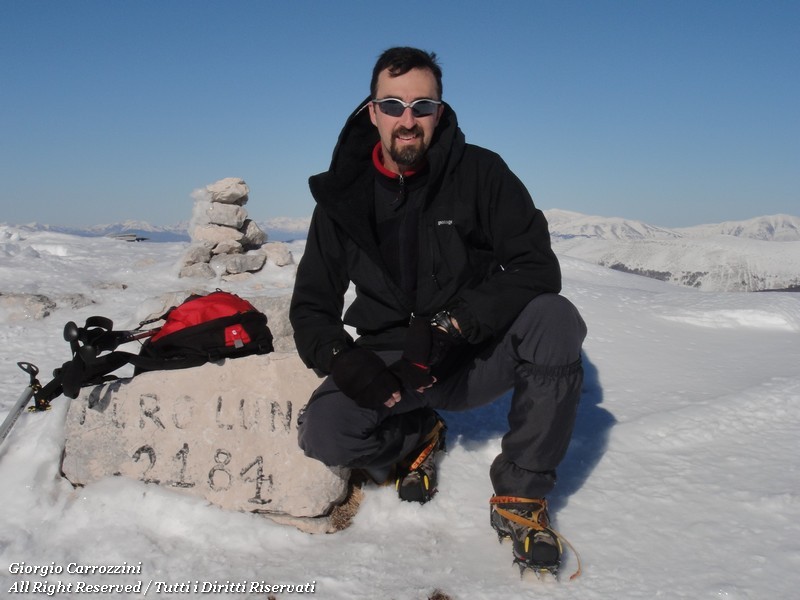
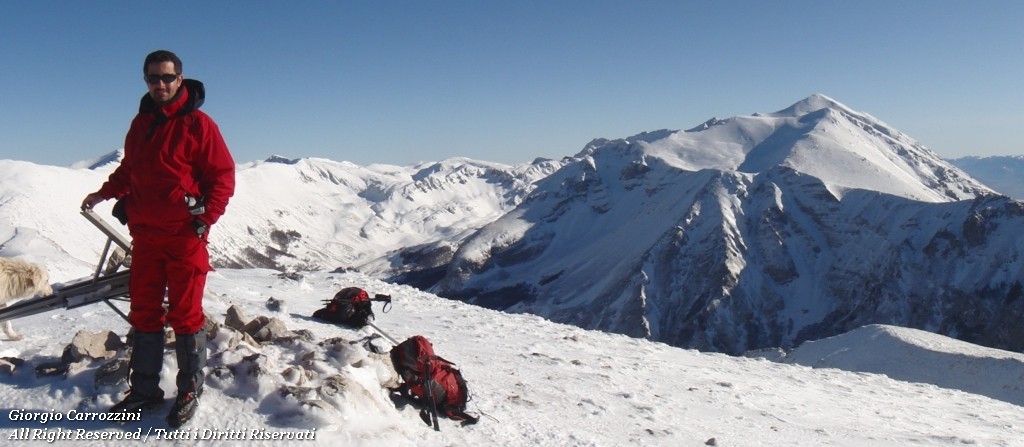
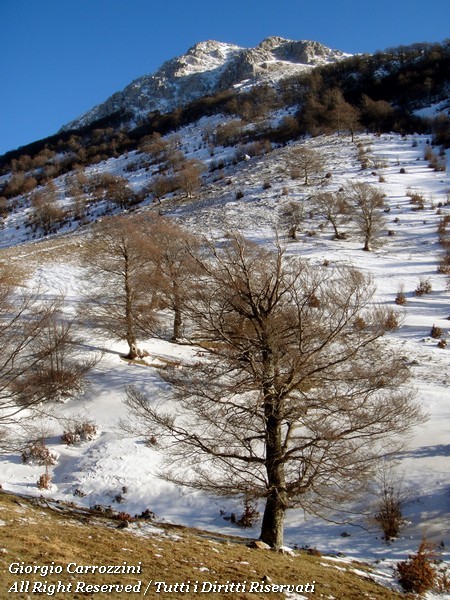
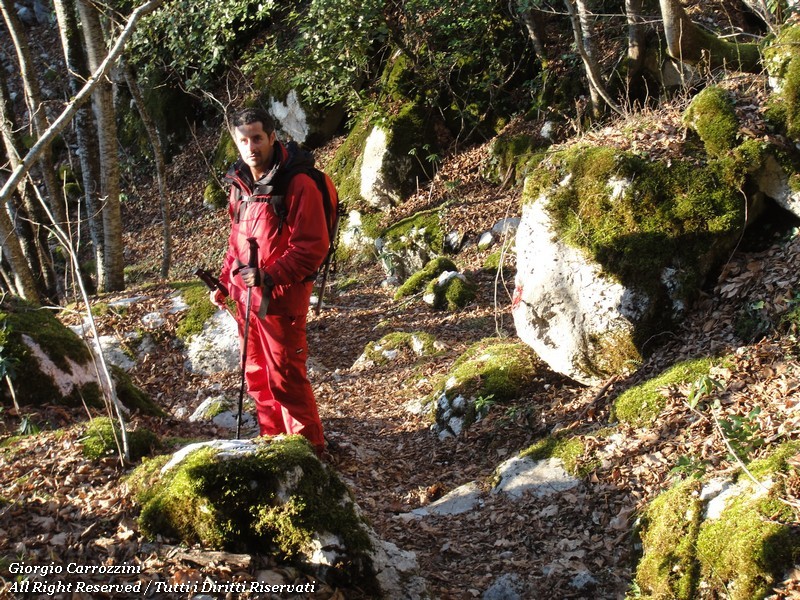
I had already been up the Murolungo twice, once in winter conditions and the second time on a late-summer ascent. The hike to the Murolungo by the Val Fua is one of the classics of the Montagne della Duchessa. The name alone stirs up a fair dose of curiosity and interest. Alessandro has read Alberto Osti's description in his book on the two-thousand-metre peaks of the Apennines countless times. He was fascinated by it, and he knows that Alberto is a true lover of the mountains as well as someone with a deep knowledge of the Apennine landscape. The winter, which started late, has brought an icy blanket over the whole of Italy. A plunge of cold air from the north that has covered the Apennine ranges with a hard crust of snow and ice. Christmas has just gone by, as always made of over-the-top lunches and Lucullan dinners. It has left us all with our bodies weighed down, and now the body is asking to be purified. Alessandro has been laid up for several months with a pain in his knee caused by a rather acute injury. For him the hike to the Murolungo is not only the satisfaction of a curiosity left unfulfilled for a long time, it is also a real catharsis, a mental and physical cleansing to shake off the long inactivity. The sun still rises very late and we decide to leave Rome at 6.30. By 7.50 we are already at Cartore. Just time to get ready and hoist our rucksacks onto our shoulders, and a big Maremma sheepdog joins us. A splendid young dog who is immediately very affectionate with us. I understand straight away that he will follow us all the way to the summit. The temperatures are bitter, hovering around zero degrees; we get moving and head into the Val Fua. The trees are bare and I have to admit that the charm of this valley is far stronger in spring, so I suggest to Alessandro that he comes back when nature wakes up. At the Caparnie we decide to carry on rather than stay inside the mountain's cone of shadow. Despite the physical effort, the biting cold gets into our jackets and freezes the sweat on our skin. From the Caparnie to the Lago della Duchessa, small flat stretches alternate with formations similar to karst dolines. The erosive action of water and of the ice age has shaped and moulded the plateau here too, into broad steps with soft, rounded forms. On the right the bulk of Monte Morrone della Duchessa; towards the east the valley is closed off by the top of the Costone Orientale; on our left the ever more imposing bulk of the Murolungo. The dog keeps following us and, despite the ice on the slopes, he always manages to catch up, covering twice the distance by making enormous detours. There is something magical about that dog's stubbornness. As we walk he always puts himself in front of the leader of the rope team, he seems to want to lead us, he seems to want to open the way for us. He has an instinct for guiding... fantastic. When he slips on the icy slope he makes a wider loop and reaches us by other ways. Every now and then he throws himself into the snow as if to play, kicks up puffs of snow, nibbles at it to quench his thirst and then starts running again. He seems to be in his natural element. He doesn't give up and he doesn't complain. His presence amuses us, keeping us company with a carefree cheerfulness, new, free of charge. Being accompanied by this wonderful animal is a new and exhilarating feeling. At a little saddle we look out over the Val di Teve and its continuation, the upper part of what is better known as the Valle dei Briganti. The winter view over the Velino and its valleys is spectacular. Alessandro seems to be in ecstasy. For him “it's the most beautiful place ever”. Actually I must say that a few years ago I felt the same great emotion. A feeling of grandeur and wonder, the thrill of being lost in the wildest heart of the Velino mountain group. Nothing comparable anywhere else in the Apennines. An area that, with winter snow cover, takes back all its natural, wild character. To join the west ridge of the Murolungo we start up a slope of “super-glossy” verglas. The points of the crampons barely bite. We are forced to move on our front points. We can't even plant the ice axe in the snowpack. I ought to use the pick, but the slope isn't steep enough. I try to keep upright and not let the half-tilt of the slope throw me too much. Without any warning the right crampon (the one I had so thoroughly ignored for most of the route) comes apart in two pieces. I stop and plant the ice axe as best I can. I call Alessandro to ask him to help by belaying me while I put the crampon back together. I'm standing on one foot. The slope isn't exposed, but it would still be unpleasant to slide down the icy slope. Alessandro reaches me, but I don't even have time to grab the two parts of the crampon before the little connecting bar that holds the front points and the back points together slips out of the main body and starts sliding all the way down to the bottom of the slope. I stand there dumbfounded, watching the piece of metal slide away from me. I can't move without a crampon. The wet verglas is so slippery that I lose my balance at every step. At the foot of the slope there is no trace of the bar. I start studying the problem and realise that to get myself off the slope I will have to cut steps for at least 40 metres. Calmly, I decide to cut steps upwards to the safest spot, near a group of rocks. There I'll be able to sit down and refit the crampon. In these situations there is always a moral, which, however, is worth less than zero. Maybe it will be worth something in the future. I was a fool to underestimate a crystal-clear feeling. The crampon wasn't just badly tightened. The crampon was coming apart under my feet. Even though I had had the chance to check that it was holding properly, out of laziness I had neglected the problem. If I had been alone I would have got out of it only at the price of a few nasty grazes. On closer analysis I understood that the crampon had come apart for a very specific reason. I was wearing a soft-soled type of boot. The boot flexed, the crampon flexed and the little block that held the two pieces together came out of its housing. The bar slid out and that was that. With the crampon back on, it's time to carry on. After the long climb up the Val Fua and the valle del Cieco to the Lago della Duchessa we were already tired enough. The east ridge leading to the summit of the Murolungo is a compulsory toll to be paid. Long, exhausting, a mix of snow and outcropping rocks that force you to move with a slow, controlled step for almost 800 metres in length and 150 metres of height gain. Alessandro is enraptured by the hike, by the little mountaineering difficulties we have met, by the weather, which has given us a day of clear sky like few others in the year. He reaches the summit guided by his ever-faithful dog. I arrive a few minutes later: I'm out of breath. I take two steps and breathe, another two steps and a few more deep breaths. I've drunk little, eaten little and rested even less. I'm exhausted and weighed down... exactly like the first time I came up this summit. More than 13 and a half km of route, 1200 metres of height gain, snow, ice. A thoroughly respectable route that gives a foretaste of the enthusiasm of a new winter season and all its extraordinary resolutions. The dog is with us on the summit; his genuine happiness fulfils us as much as the very idea of being on this peak. I give him one of my sandwiches and he doesn't leave a crumb; Alessandro throws him a few pieces of pizza. The dog eats, grateful for this little refreshment, but he doesn't know that for us his carefree presence has been a new way of going to the mountains. A dog's friendship is priceless, and sincere like nothing I had ever seen elsewhere. We don't stay long on the summit: it took almost four hours to climb up and it will probably take another three to get down. We eat and drink just enough to face the descent; the wind on the summit is fairly persistent and cold, we can't stop for long. We take the usual ritual photos and set off again briskly. We can say we are fully satisfied with this well-earned conquest. I had promised Alessandro I would take him up the Murolungo. But what is a promise worth?
|
|
|
|
|

Photo gallery






Fact sheet
- Hike fact sheet
Fact sheet not available yet...