|
For some time now people have been talking about poison ivy. At our home crags there are only rumours going round, a lot like urban legends, while in America climbers recognise it on sight the way we recognise nettles (50 million cases every year in the USA).
Given the growing number of episodes and the list of sightings that keeps getting longer, I made up my mind to write this article, even though it isn't a climbing pathology in the strict sense. I was particularly struck by the episode of a party of young climbers who ended up in A&E after a visit to the “Grotta dell'edera” (Ivy Cave) at Finale. To be honest, some accounts and some photos also seem to show the presence of poison oak, a shrub with similar effects.
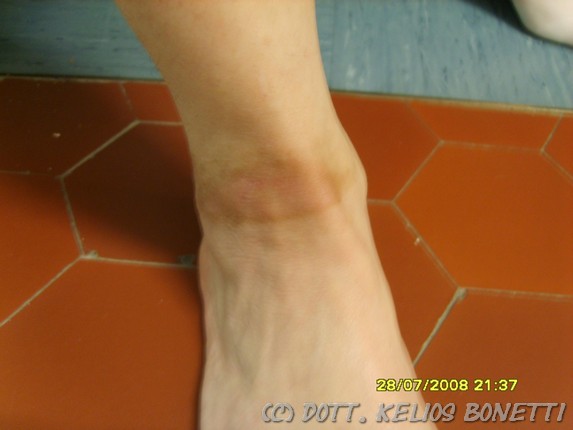
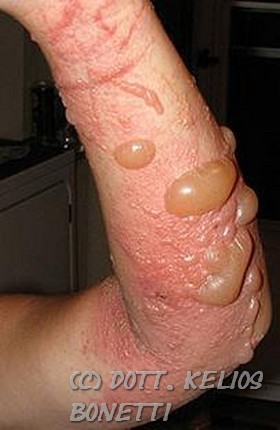
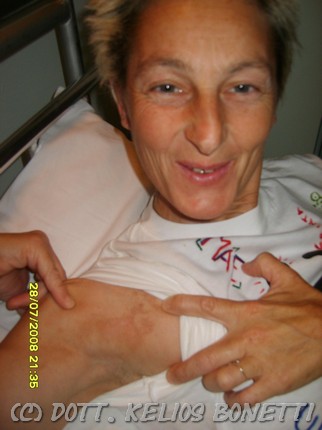
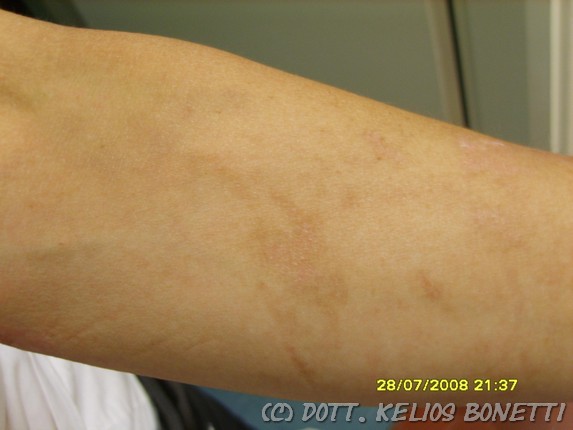
Contact with this plant leads to allergic contact dermatitis, with phlyctenae (blisters) forming on the skin. Healing is fairly slow, and with damaged skin you have to give up climbing for a while, because the skin is fragile and because of the risk of infection in the sores left behind if the blisters burst. On top of that, the affected skin keeps some rather unsightly dark streaks for quite some time.
A bit of culture on poison ivy (for those who have time to read)
Poison ivy (Toxicodendron radicans) is a plant of the Anacardiaceae family.
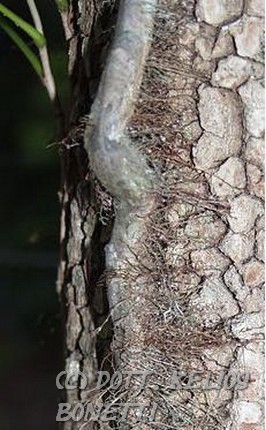
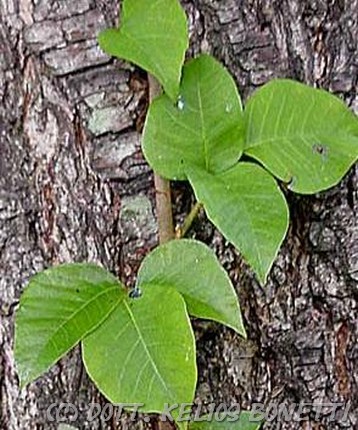
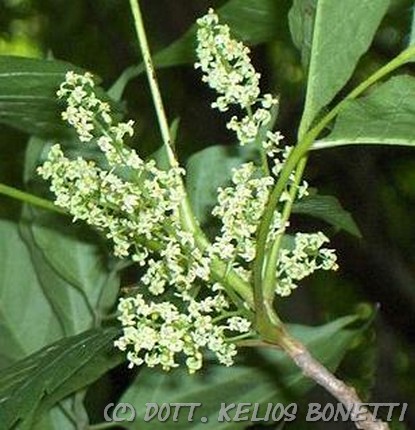
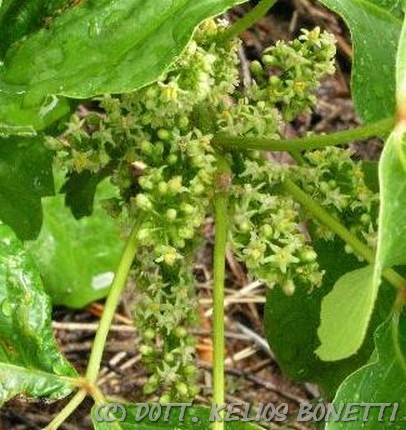
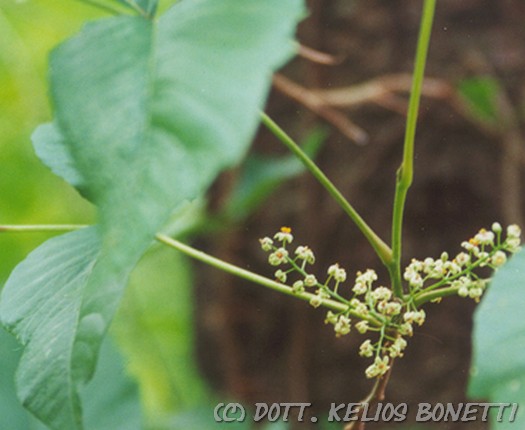
It has nothing to do with common ivy (Hedera helix). It causes contact dermatitis. It comes in the form of a small plant up to 120 cm tall, or a shrub, or a climber. As you can see from the photos, the leaves have different shapes and colours depending on the stage of ripening. It is typical of North America, where it prefers rocky ground with good humidity, and it grows below 1500 metres of altitude. It produces white inflorescences with small berries.
The whole plant secretes (but above all contains inside it) a resin rich in urushiol, a skin irritant responsible for an autoimmune-based contact dermatitis. Urushiol binds to proteins of the cell membrane and modifies them, making them look foreign to the body, so the body produces antibodies against them for a T-mediated response, damaging itself. It can also cause anaphylactic reactions. About 20% of the population is immune to it in America; in Europe the percentage is probably much lower.
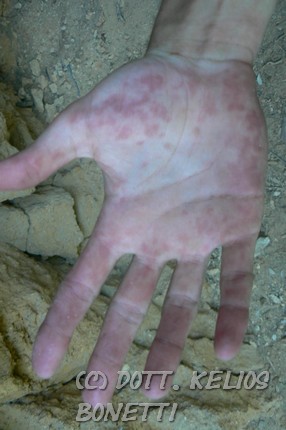
Like all allergic reactions, it needs a first contact with the antigen. After that, over a period of 5-10 days, the body creates immunoglobulins, which are then released on later contacts, giving rise to the allergic-autoimmune reaction, which within 6-24 hours shows up as a skin rash, redness, swelling, more or less intense itching and the formation of papules, phlyctenae and blisters containing a clear fluid. The blisters heal in 1-2 weeks, sometimes leaving discoloured scars. Sometimes the blisters, or the ulcers left when they burst, become infected. The timing of the symptoms is influenced by many variables.
Eating the plant and breathing in its smoke are dangerous too. The resin stays active for years, so even contact with uprooted plants, animals, clothing or materials soaked in resin can cause reactions.
Why
There are different opinions on why this emergency is happening right now. Some talk of a conspiracy against crag climbers (as for the fleas in the Dolomites, some talk of a conspiracy by crag climbers against mountaineers). Since it is not a native plant at our crags, the theory of seeds brought by climbers from across the ocean seems sensible, even if it isn't supported by evidence. Anyway, the crags with the first reports are the most famous ones and therefore the most visited on climbing trips. Anyway, if this theory is true we should expect to see it popping up at every crag, since now it's us locals who are the plague-spreaders, especially considering that crags seem to offer a good habitat for this plant
What to do: from A to Z
Before coming into contact
Learn to recognise it properly by looking at photographs (not by sitting on it).
When possible, pull it up, roots and all. Gloves are recommended; watch your forearms
Let other climbers know too
It would be a good idea to put up a warning sign at every infested crag. I've prepared a rather explicit one for you.
After contact:
Wash the area thoroughly with soap and water as soon as possible; since it is a resin that doesn't dissolve in water, water on its own isn't enough (but it's better than nothing)
If possible within 30 minutes, use solvents specific to this resin, non-ionic surfactants, for example Triton X-100. In America a product called Teknu is very popular among climbers. These products dissolve the resin containing urushiol, and must then be rinsed off the skin with water after 30 minutes. Be careful with alcohol-based solvents: some people believe they increase the penetration of the resin into the skin.
If redness appears, apply ice in 10-minute cycles ( or less if the skin is damaged) wrapped in a dry cloth.
See a doctor at A&E (there is no vaccine) or a dermatologist (feel free to bring them this article), who, depending on the symptoms, will start treatment with antihistamines and or cortisone, topical or oral.
In some cases your doctor may drain the blisters under sterile conditions and apply alcohol to the membrane, to reduce the risk of it breaking and forming an ulcer with a high chance of infection. The effectiveness of this treatment has not been proven, although it is theoretically correct if carried out with outpatient disinfection equipment.
Keep an eye on the blisters and ulcers: signs of infection setting in are an indication to start antibiotic therapy specific for staphylococci and streptococci
Wash clothes and gear thoroughly. A normal detergent and a hot-water wash (not advisable on the skin, so as not to make the inflammation worse) generally manage to remove the urushiol
Don't expose the scars to the sun
It would be a good idea to put up a warning sign at every infested crag. I've prepared a rather explicit one for you.
By Dr Kelios Bonetti (Yena), expert in climbing pathology
With thanks for their collaboration to:
Lucia Pizzati Casaccia (Lux), T-climb climbing instructor.
Gruppo Botanico Magnum. DOWNLOAD HERE THE WARNING SIGN TO PUT UP AT INFESTED CRAGS
www.patologia-arrampicatoria.it
|
|