Apennine Culture
A collection of information and curiosities of an encyclopaedic nature. Tourist, food and wine, natural and cultural information about the Apennines.
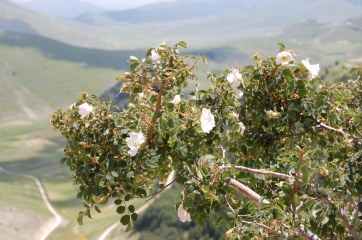
Dog rose (Rosa canina L.)
By Redazione Published: 13/06/2012
The rose is widely used for its content of vitamin C, tannins and organic acids. It has astringent, vitamin-giving and diuretic properties. For external use it is employed as a decongestant (eye baths, gargles for …

Orogenic phenomena - a brief introduction
By Redazione Published: 13/06/2012
As we saw in the theory of plate tectonics, the main cause of mountain formation is the collision between plates. Specifically, it is the collision between plates carrying continental crust that would give rise to…

Formation of the Italian mountains
By Redazione Published: 13/06/2012
The birth, formation and evolution of the Italian mountains is closely linked to the geological history of the European tectonic plate and of the African one.The process that shaped the lands as we know them…

The birth of mountains and plate tectonics
By Redazione Published: 12/06/2012
As two well-known LIFE writers, Lorus Milne and Margery Milne, once wrote:“There are many surprising things about mountains, but perhaps the most astonishing of all is the very fact that they exist.”We spend more and…
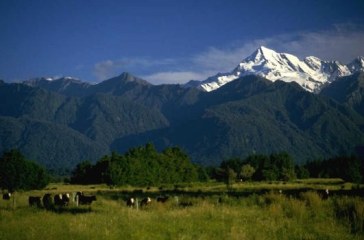
Mountains in geography
By Redazione Published: 12/06/2012
From the basics of geology we learn that the relief of the earth is the result of the slow movement of the tectonic plates, of their colliding, folding and rising, and of the erosive action…

Picea abies (L.) Karst - Norway spruce (abete rosso or peccio)
By Redazione Published: 12/06/2012
It is a species that can be described as half-shade tolerant: Norway spruce regeneration can survive for over a century under cover and then recover if brought into the light. It does not tolerate drought…
The subalpine belt
By Redazione Published: 12/06/2012
Floristic overview...The characteristic forest species of the subalpine belt are the Swiss stone pine and the mountain pine (rarer), the larch and the Norway spruce.The typical woods of this vegetation belt have the tree line…

Common juniper (Juniperus communis L.)
By Redazione Published: 12/06/2012
Juniper has diuretic, antiseptic, balsamic, expectorant and stimulant properties. Precisely because of these properties it was widely used in the past as an antidote against animal bites and poisons. It was also believed it could…

Saffron - Crocus sativus L.
By Redazione Published: 29/05/2012
The spice that comes from afar… If you have looked for information on saffron you will certainly have come across the usual Wikipedia page, perhaps too academic, perhaps too full of facts to give you…