Going to the mountains knowing you can do it…
Anyone who wants to go on high-mountain hikes, climb or go mountaineering, putting themselves through long hours of walking, physical stress and exhausting climbs, cannot do without enjoying excellent health.
Undoubtedly you need to know your own body well, your own strength, your own physical limits, without ever overestimating your endurance, because the fatigue that sets in in the mountains, given its consequences, is more insidious and dangerous than the fatigue we are used to in everyday life. Just consider how serious, in this context, the effects of the first major symptom of tiredness can be, namely the drop in attention.
But what should you do to assess your physical condition and health?
Anyone who wants to undertake very demanding climbs in difficult environmental conditions is always advised, first of all, to talk it over with their own doctor, putting aside fears, false modesty and laziness.
Your doctor will be able to help you better than you think; their advice will give you the measure of what you will and/or won't be able to do in the mountains
 First of all you need to be orthopaedically fit and not have had any recent problems.
Setting off with chronic tendinitis, neuralgia, arthritis or lumbago is highly risky, because in these conditions you tend to place your foot wrongly and, besides making the situation worse, you risk accidents and falls due to poor coordination.
Then you need to make sure of your cardiac fitness, and for this we need the doctor. A first examination will look into our past: have we ever had problems during exertion (pain, breathlessness, irregular palpitations), have we ever fainted? Remember that fainting is in most cases a benign phenomenon, especially in people with low blood pressure and in those who drink little in summer.
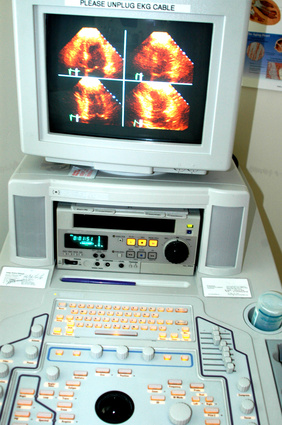
Then the doctor should listen to our chest and work out whether we have any murmurs; if they notice one, then to be on the safe side they should ask for a Doppler echocardiogram, though this is usually not necessary, it's not routine.
What is compulsory, on the other hand, is the classic electrocardiogram (ECG), which unfortunately tells us little, because the heart is studied in its resting metabolism.
That's why the key test for the aspiring mountaineer is the exercise electrocardiogram (stress ECG), which studies the heart's metabolism under pressure, making it possible to detect the smallest anomaly, especially if the heart muscle cannot receive the maximum oxygen through the circulation of the coronary arteries.
Most (80%) sudden deaths are due to ischaemia (= lack of oxygen to the heart muscle), and the reason the oxygen doesn't arrive is an obstruction to the circulation inside the coronary arteries. Unfortunately the blockage happens quickly, but we know that the plug (a thrombosis = clot) forms only on top of a cholesterol plaque, which builds up slowly, over the years, inside the coronary artery. So the important thing is to discover the plaques (atherosclerosis ???), and the simplest way we have is the exercise electrocardiogram. There are other possible tests, for example radioisotope scintigraphy, CT scans, coronary angiography by catheterisation, but they are much more complicated.
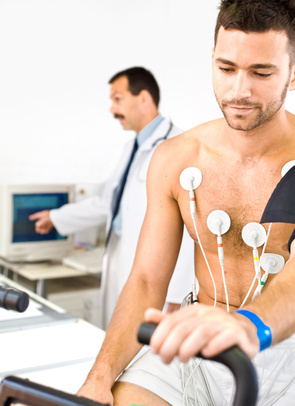 The exercise electrocardiogram is advisable for mountaineers who are more likely to have atherosclerosis: those over 45, smokers, the overweight, those with high cholesterol, those with high blood pressure, diabetics.
Since in an endurance sport such as mountaineering good lung ventilation counts, significant bronchial asthma, chronic bronchitis and emphysema must be ruled out. Listening to the lungs can establish their state of health, but in suspect cases you have to resort to spirometry. Note that mild asthma is not a contraindication to the activity. High altitude, moreover, is an environment poor in allergenic agents and dust; still, it's enough to know you have the problem and carry your bronchodilator spray.
Periodically (every three or four years) you should have a complete blood test: this gives us a general overview of the health of the kidneys and liver, and of the number of circulating cells. For example, few red blood cells indicate a degree of anaemia: it's the classic problem of the athlete who eats a diet low in meat and suffers a slight but constant destruction of red blood cells (haemolysis in the sole of the foot while walking).
Sometimes even a healthy athlete can collapse from syncope or, unfortunately, sudden death; it's the kind of news you read every now and then in the sports pages. This is due to a fatal arrhythmia called ventricular fibrillation. It usually affects heart patients and those with a severely ischaemic heart or one malformed from birth, but it can also strike a healthy athlete, mainly in two cases: someone on cocaine or someone dehydrated.
Dehydration in the mountains is extremely dangerous and often goes unnoticed, because the mountaineer may feel cold, may be concentrating on the climb, and have no obvious symptoms of dehydration, which, together with heavy sweating, goes hand in hand with the loss of potassium and magnesium. These electrolytes are essential for the heart's electrical balance. That's why a shortage of these mineral salts can upset the heart and trigger a fatal fibrillation. It's enough to take a few salts dissolved in water each time, or a fruit juice, to almost completely eliminate this risk. Of course these salts are also contained in food, especially fruit.
All in all, the exercise electrocardiogram is a valid tool for diagnosing your physical condition, especially if you have to face a series of competitive mountaineering commitments; it must be done by anyone who has turned 45 or has risk factors for atherosclerosis.
What's more, it's always best to turn up for a climb in good shape, trained, but with at least three days' rest behind you, and with a small bottle of mineral salts in your rucksack.
Summing up the useful and necessary checks for hiking and mountaineering:
- General check-up with your GP;
- Specialist visit to a cardiologist;
- Exercise electrocardiogram;
- Colour Doppler echocardiogram.