|
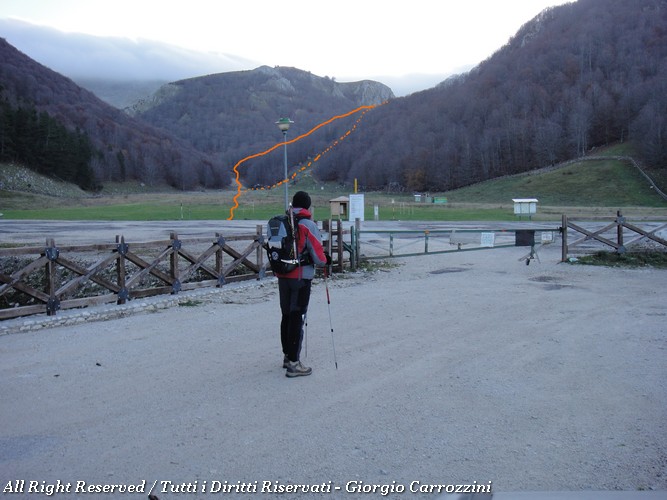
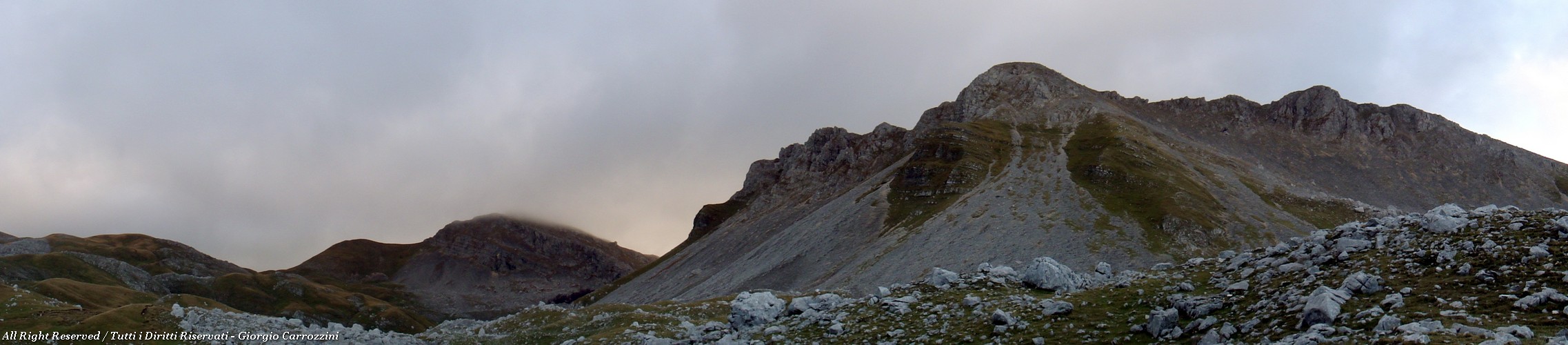
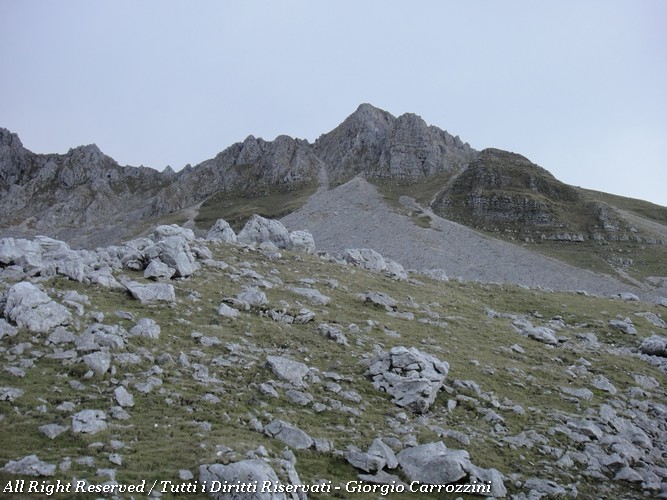
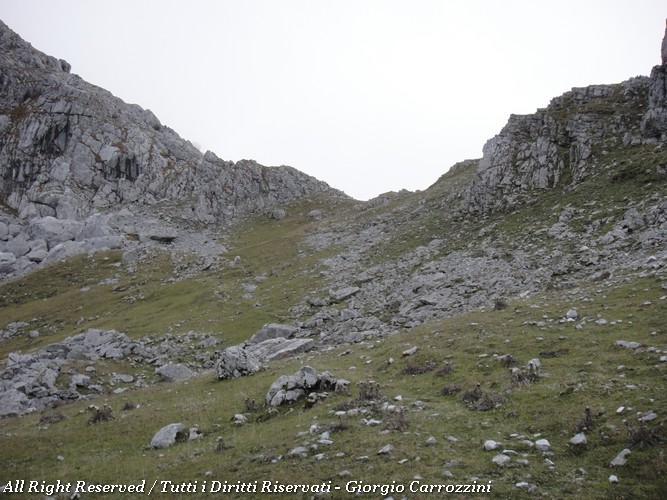
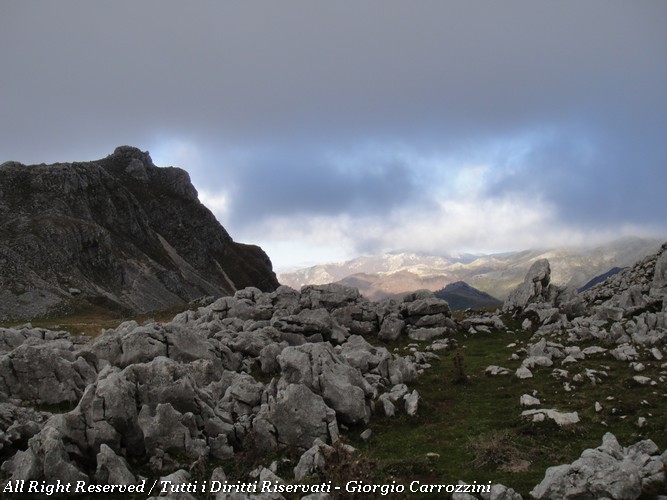
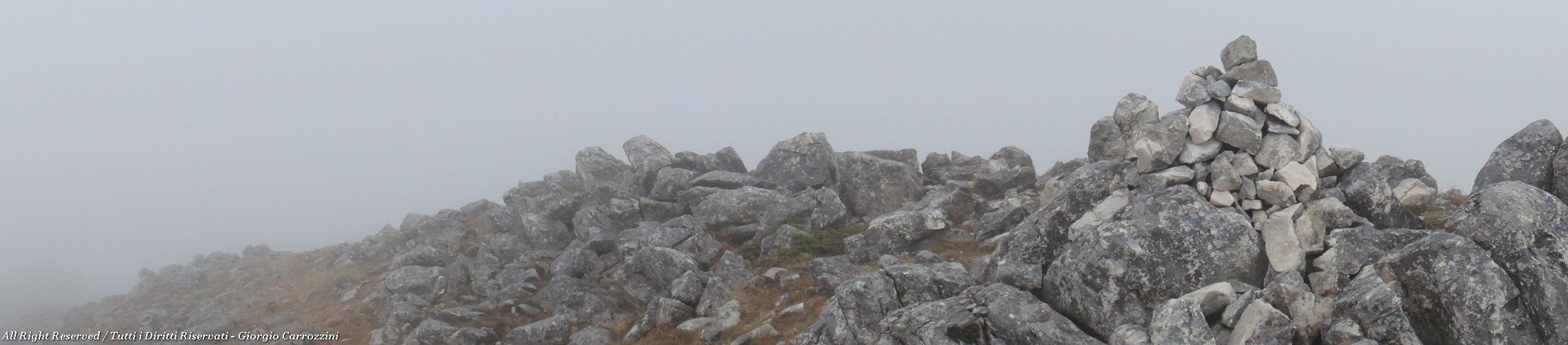
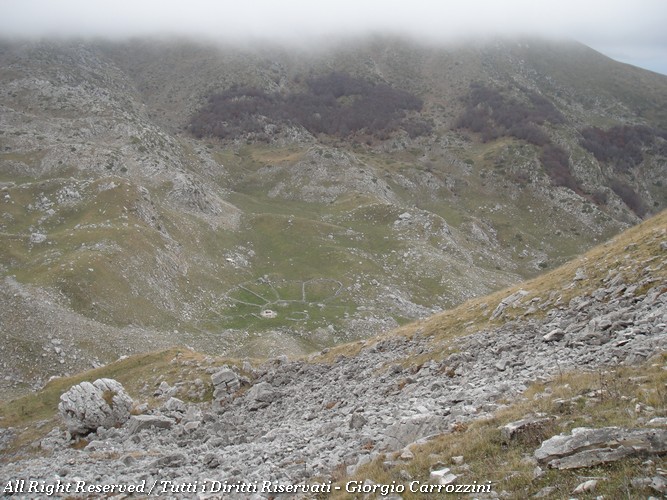
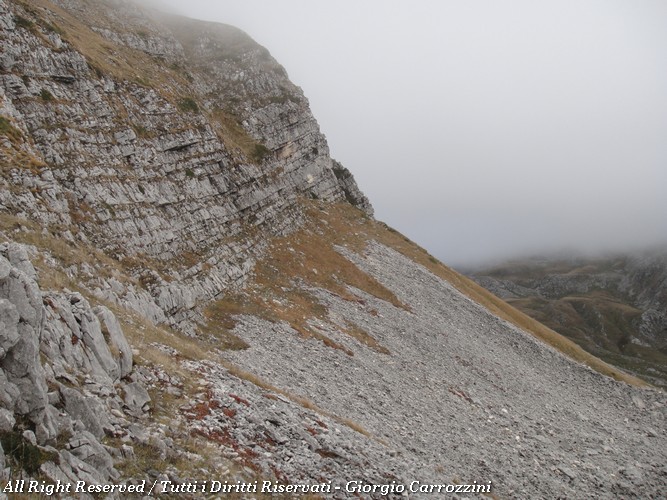
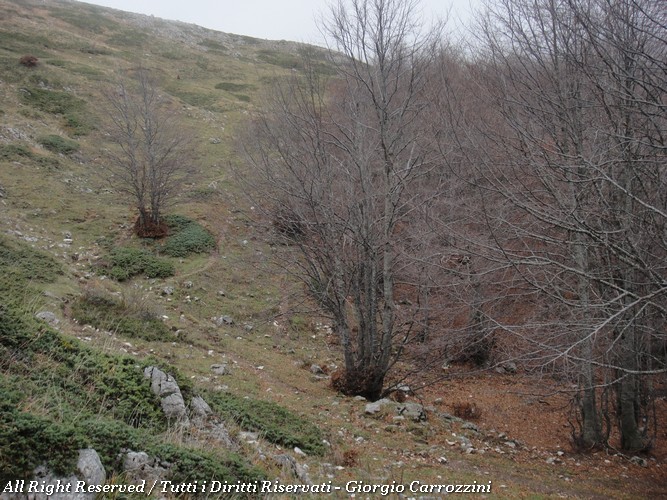
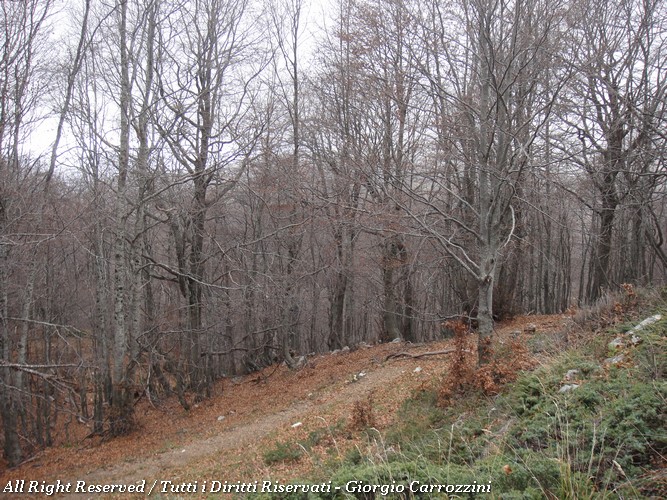
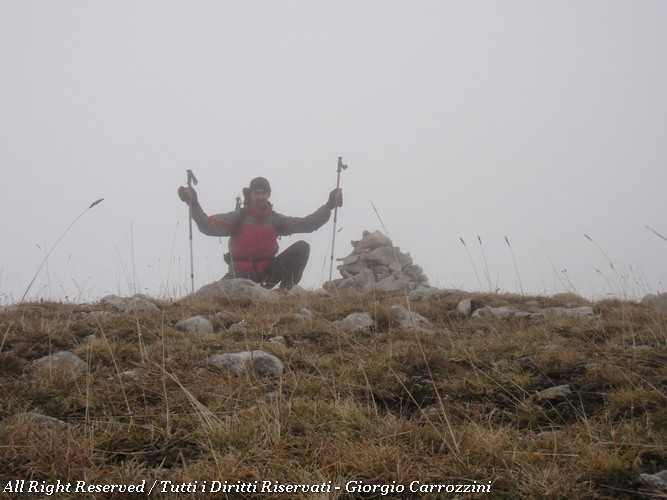
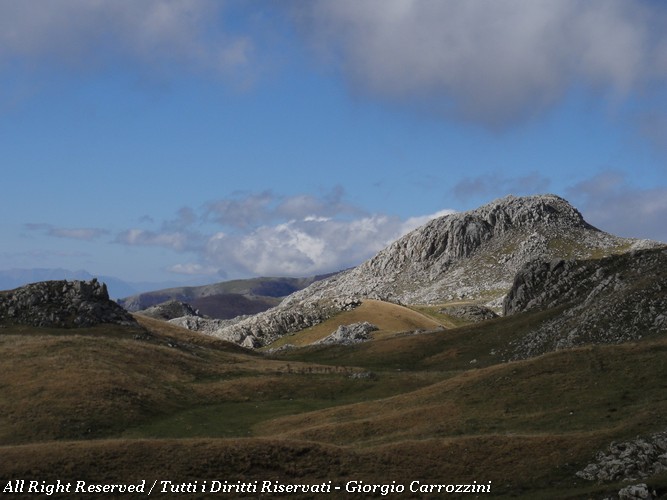
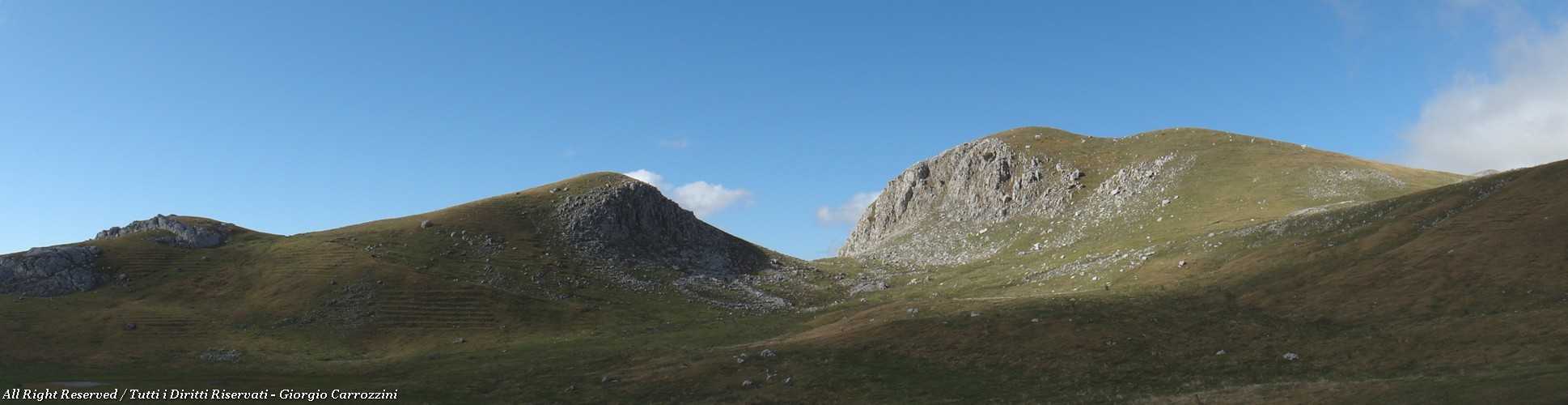
Of all the Mainarde, Monte Cavallo is a particularly interesting summit: set deep in the living heart of the mountain group it belongs to, it can easily be reached from Prati di Mezzo with a pleasant walk that takes you gradually up to the summit for most of the route. The whole mountain group, just as in the case of Monte Petroso, shows the unmistakable marks of glacial erosion from the Quaternary era, as well as visible signs of karst erosion of the rocks. The route starts from the large car park at Prati di Mezzo. You cross the big meadow up to the old ski lifts. You carry on keeping to the right (northwards) until you pick out the signs of a gravel track that crosses the wood and makes you gain a little height. Once you have gained the first 50 metres of ascent you bend slowly southwards, entering a characteristic valley. The path runs straight along the edge of small rock towers until it comes out near the remains of an old stazzo (shepherds' stone enclosure). The view opens up, revealing Monte Forcellone to the south and, further away, the Cavallo. An extremely pleasant feature of these valleys is the abundance of water from the melting winter snows, which you can still find late into the summer season. Walking up the wide valley below Monte Forcellone you can take the chance to snap marvellous and unexpected photos of the tall towers that make up its northern ridge. Marvellous, the contrast of the big boulders scattered over the vast meadow below Monte Forcone, marked also by the stream that rises from the many springs below the Cavallo. Monte Forcellone and Monte Cavallo are separated by a broad saddle reached by easy zigzags. From the saddle you can guess the position of the summit (not very visible); you carry on keeping to the left (orographic North) along the ridge of rocks and boulders, and in about forty-five minutes you reach the summit by little moves of barely grade I. The valley that opens up from the saddle southwards towards San Biagio Saracinisco looks truly fascinating. Partly for the generous meadows, partly for the contrast with the eroded shapes of the surrounding peaks. The north-eastern face of Monte Cavallo drops away insistently, echoing the shapes of Monte Forcellone. Stones and scree mark the erosion of these slopes. It is possible to come down this side with due caution. From Monte Cavallo you can reach, with some extra effort, the distant Monte Mare and its low and insignificant summit of the Ferruccia. The hike, in the first days of spring, between early May and early June, can be an ideal experience and, despite the length of the route, a pleasant and relaxing mountain walk. The return by the same way is not as quick as you might think: a few ups and downs at the end of the day can certainly turn into a more tiring effort than expected. I had the chance to visit these summits on one of my midweek outings. Despite cloud cover higher up that blocked the panoramic view, down in the valley visibility had stayed excellent throughout. However, this hike is not recommended with poor visibility persisting in the valley too, because of the risk of losing the path. Fortunately these places are still fairly wild and there is certainly no shortage of wild animals, including the Bear and the Wolf. The hike, cut down to Monte Cavallo alone, can also suit younger hikers and willing children who know how to cope with tiredness and a few moves on deeply eroded little rocks. In particular I must thank two hiking companions, Diego and Max, who have always urged me to spend more time on these mountains. |
|
|
|
|
Photo gallery



Fact sheet
- Hike fact sheet
Fact sheet not yet available...