But what should a good first aid kit contain? There is no simple answer. Obviously we may have different needs depending on whether we are about to set off on a one-day hike or are getting ready for a trek of several days.
A small extra weight in the rucksack that we should learn to consider indispensable
So that it is never needed, but...
While we hope it is never needed, the first aid kit can be useful, especially in the case of minor accidents, and it is a good idea for at least half the members of the group to carry one. You can be sure that if you haven't brought a first aid kit, that will be the time you need it: a cut, a sprain, a terrible toothache could spoil your hike just enough to push the views and the natural beauty into the background.
But what should a good first aid kit contain? There is no simple answer.
Obviously we may have different needs depending on whether we are about to set off on a one-day hike or are getting ready for a trek of several days.
In both cases we suggest putting together your own first aid kit, since the ones currently on sale do not include all the medicines considered indispensable. Often the first aid kits sold in the shops cost out of all proportion to the commercial value of their contents.
First Aid Kit for Short Hikes:
- Painkilling ointment for knocks, muscle strains and sprained joints
- Aspirin / Anti-inflammatory according to your own physiological tolerance
- Sterile gauze and adhesive tape
- Elastic bandages
- Small/medium/large sticking plasters
- Butterfly stitches
- Disinfectant
- Anti-UV sun cream
- Sachets of sugar (for hypoglycaemic dips)
- Anaphylaxis kit (to treat serious allergic reactions to insect stings)
- Sterile gauze pads for compression or sterile cotton wool
- Foil blanket
- 1 Tourniquet
- Antispasmodic for intestinal colic (e.g. Imodium)
- Pack of Painkillers (e.g. Dolorfast)
First Aid Kit for Long Hikes:
On top of the kit for short hikes, these items should be added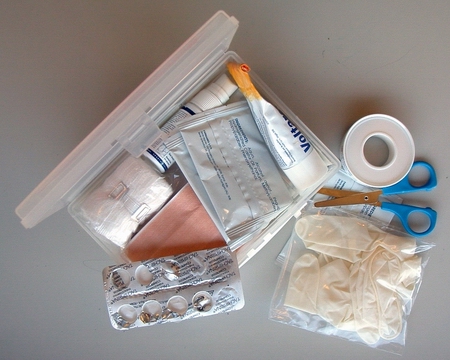
- Sterile gloves
- Disinfectant wet wipes
- Antibiotic
- Sterile scissors
- Sterile blades
- Needle and thread for stitches
- Soothing cream for insect bites
- Plasters for blisters and corns
For anyone who wants to stay at altitude above 3000 metres for many days, we advise getting a diuretic through your own doctor and, naturally, finding out more about the effects of high altitude on human physiology.
It is good practice, before every departure, to check the expiry date of the medicines in the kit, to replace the ones that have expired and to change gauze, cotton wool and bandages at least once a year.
Everything should be kept in a waterproof pouch or, failing that, in plastic bags, and the whole lot in a well-closed fabric pouch, so that the pieces that make up the kit don't go wandering about the rucksack, compromising the integrity and sterility of the materials.
The aim of anyone who goes into the mountains is not to treat sprains or wounds, but to prevent accidents by taking every possible precaution and care. Having a first aid kit in your rucksack is certainly indispensable, but it is just as important to know how to use it. Every mountaineer should take a first aid course; today there are many of them, organised by the sections of the CAI (Italian Alpine Club) or by the Red Cross.